Hemp fibre insulation
The fibres form the insulation material. Product-specific tested values and the planned construction build-up guide the choice.
Check: fire safety, thermal performance and moisture protection must suit the application.

Hemp fibres for insulation, hemp-lime for insulation and infill: explore the materials, their uses and limitations. Klimafeld connects this knowledge with regional cooperation around Vienna.
Explore hemp building materialsGet to know Klimafeld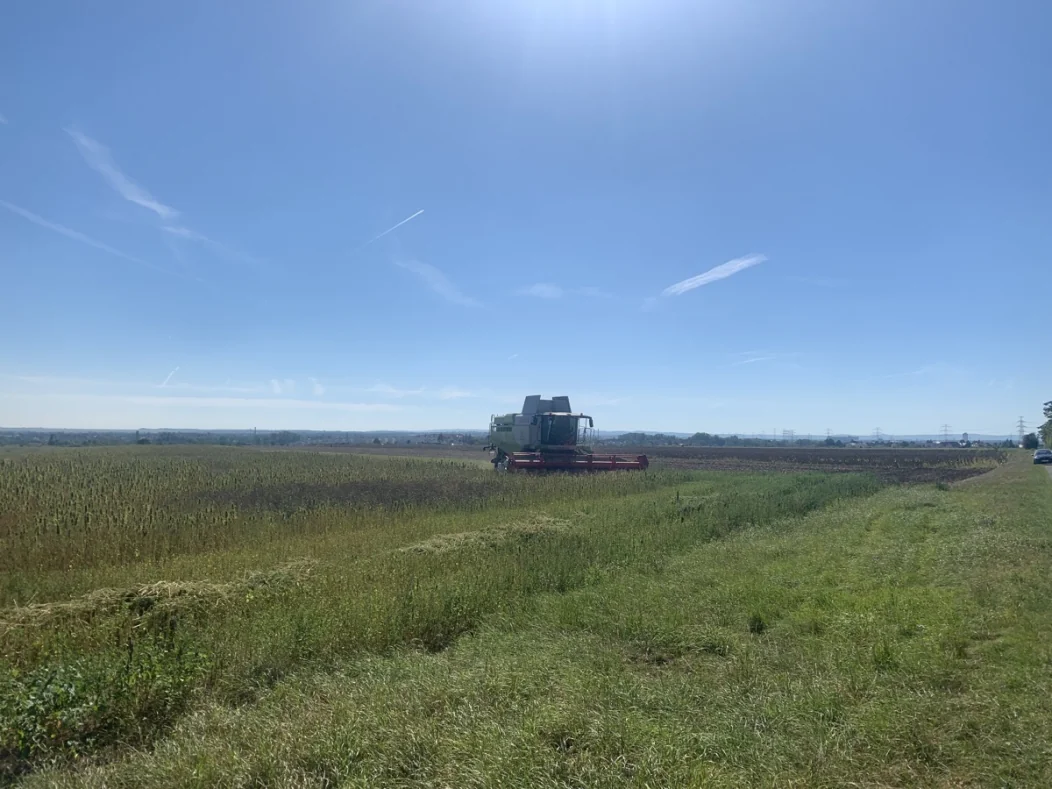
Building with hemp starts with understanding which part of the plant is used. The long fibres and woody shives are processed in different ways.
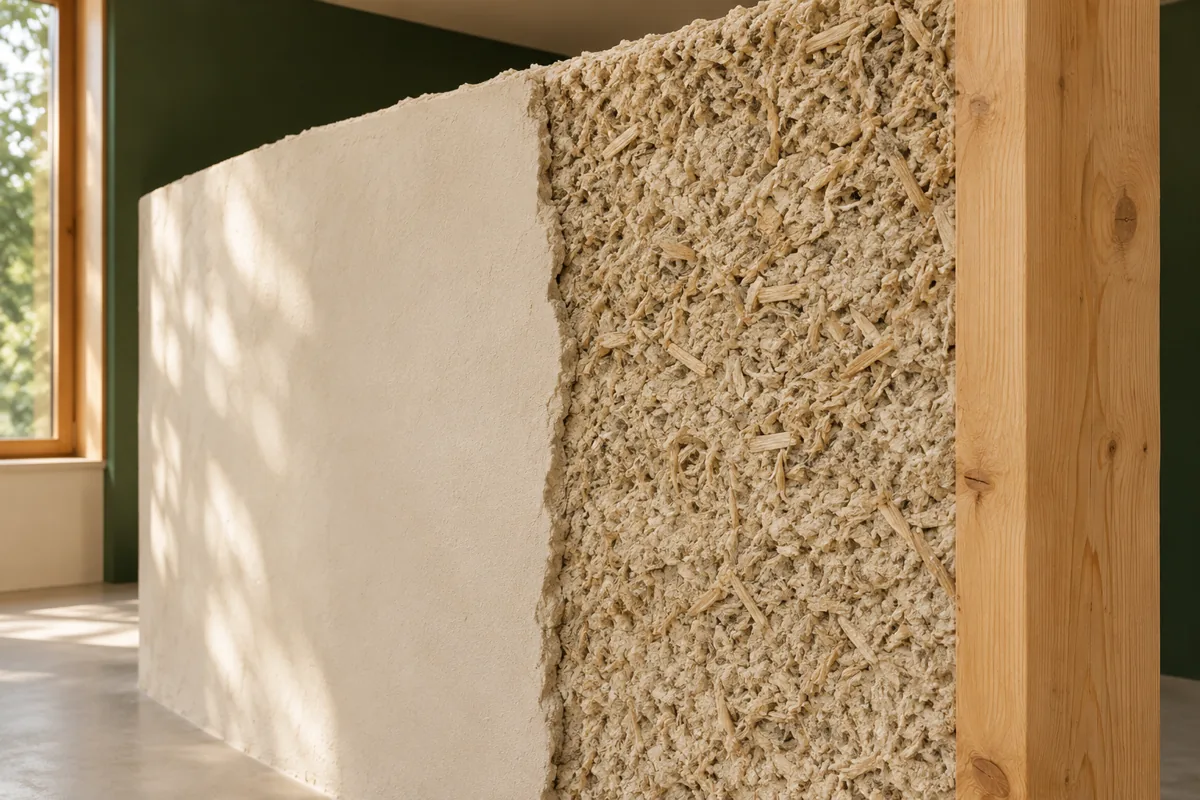
The fibres form the insulation material. Product-specific tested values and the planned construction build-up guide the choice.
Check: fire safety, thermal performance and moisture protection must suit the application.
Hemp shives are combined with a mineral binder and water. Typical applications include insulation and infill.
Important: a separate structural frame usually carries the building loads.
How does hemp become a building material? This process chain shows how the stages connect.
Quality begins in the field: variety, harvest and storage influence the raw material.
Stalks are processed. Fibres and shives are separated and graded for their intended uses.
Depending on the product, fibres become insulation, or shives are combined with binders to form hemp-lime.
Construction build-up, product performance and professional design determine suitability.
Simplified process illustration. Methods and testing requirements vary by product. This does not depict an existing Klimafeld production facility.
Hemp is a renewable raw material. Its environmental impact nevertheless depends on cultivation, processing, binders, transport, use and end of life. A product-specific life cycle assessment considers these stages together.
For an actual building project, tested product performance and the complete construction build-up matter. Fire safety, thermal performance and moisture protection require professional design. General plant properties cannot replace product testing.
A hemp field’s effect on biodiversity also depends on crop rotation, farming practices and the surrounding landscape. Growing hemp alone does not guarantee greater species diversity.
Learn more about hemp, biodiversity and material uses →We are an association based in Vienna. We share knowledge about industrial hemp and work towards regional cooperation between farming, processing and practical applications.
The association documents a fibre-hemp pilot cultivation project near Schwechat in 2023. Our further plans build on this experience. A regional processing chain is a development goal; planned expansion steps are not results already achieved.
Explore the project →Would you like to support the association’s work or contribute a practical question? Choose the right starting point.
Discover how donations support the association’s work.
View donation options (German) →Find out what membership of Klimafeld means.
Explore membership →Do you work in farming, design or processing? Share your questions and ideas.
Contact Klimafeld →Donations and memberships support the association’s work. They are neither building-material purchases nor certified carbon offsets.
Editorial responsibility: Klimafeld Association · Updated:
This page explains the basics and cannot replace project-specific building design. Technical performance values must be taken from the relevant product documentation.