Auf Deutsch lesen

KLIMAFELD · Knowledge

From hemp field to building material

A stem contains two different raw materials: outer fibres and a woody inner core. Coordinated harvesting, processing and manufacturing turn them into materials for construction.

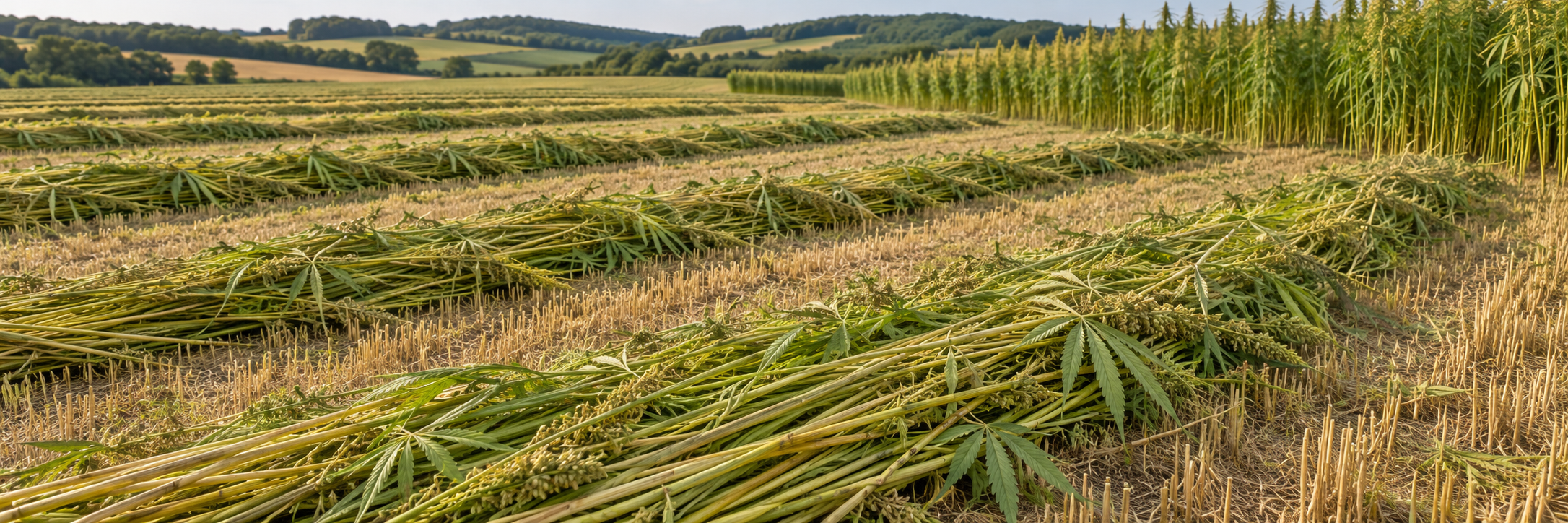
AI-generated illustration: cut hemp stalks in windrows in a field
AI-generated illustration of a hemp harvest.

The route at a glance

  1. CultivationAgree use and customer requirements
  2. Harvest & rettingPrepare straw quality
  3. Drying & storageMaintain quality
  4. Mechanical processingSeparate and clean
FibresInsulation batts and other fibre products
ShivHemp-lime and suitable loose fills

Schematic educational overview, not plant engineering or product approval. The diagram shows a typical relationship, not a single mandatory process sequence. No project photography.

1. Start with the intended use

Variety, harvesting and customer requirements need to match. A crop harvested for seed does not automatically provide the same straw quality as a fibre crop. Processor requirements matter more than blanket yield promises.

2. Distinguish harvesting from retting

Harvesting turns the standing stems into straw. During field retting, natural breakdown processes facilitate later separation of bast from the woody core. Method and duration depend on weather, feedstock and intended product; processing routes do not all require the same degree of retting.

3. Store dry, clean and traceable material

Straw needs to reach the agreed moisture condition before baling and storage. Wet material can deteriorate. Moisture checks, protection against rewetting and batch records therefore belong in supply agreements. A fixed moisture threshold is not a universal recommendation without customer and process requirements.

4. Open the stem mechanically

Decortication separates bast fibres from the woody interior. Cleaning and further processing prepare the fractions for their next use. Fines arise alongside fibre and shiv; their use and safe handling need planning too. A processing line does not automatically deliver finished quality for every building product.

Two raw-material routes – different products

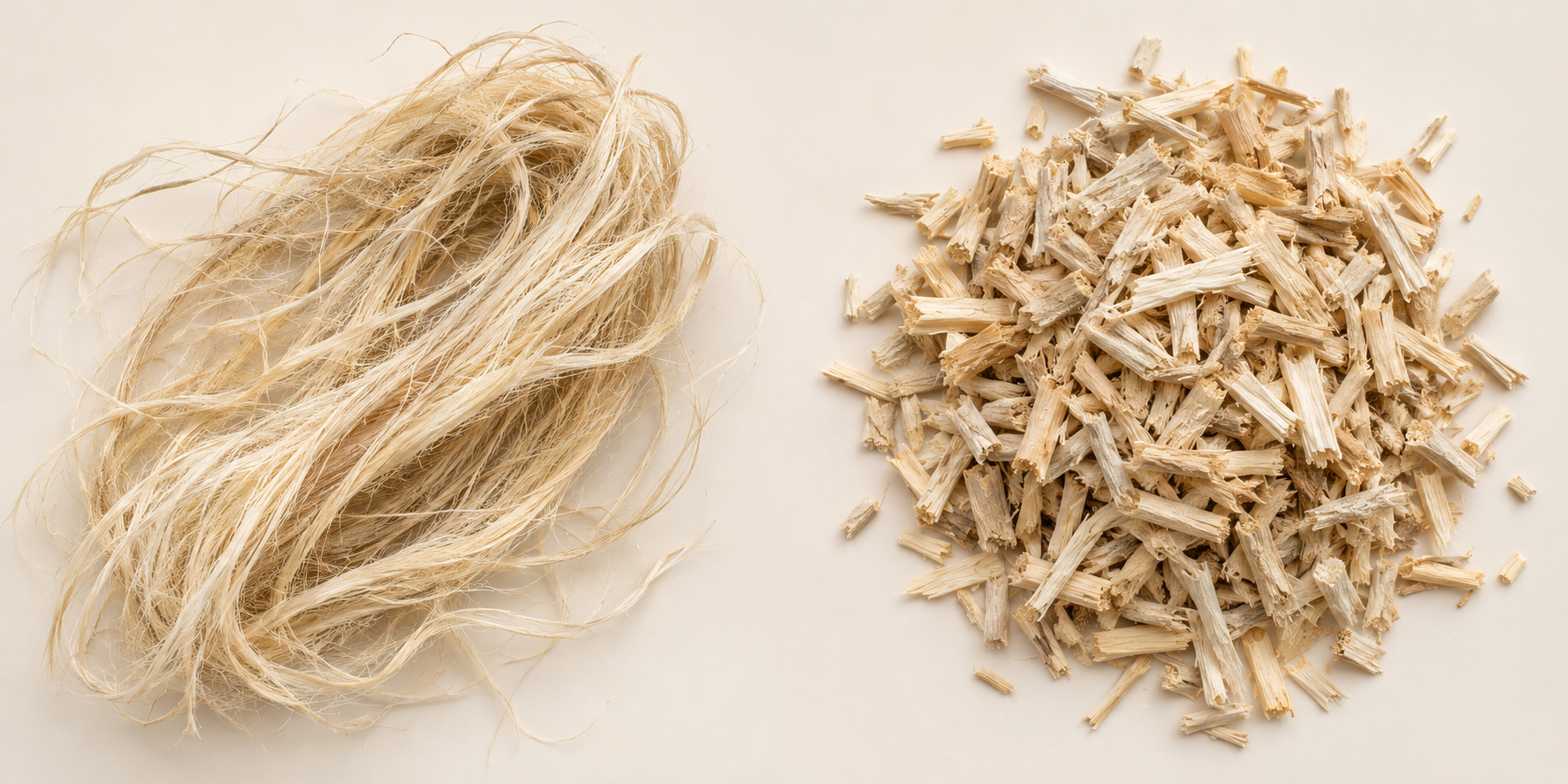
AI-generated illustration of long pale hemp bast fibres
Hemp bast fibres · AI-generated illustration
AI-generated illustration of short woody hemp shiv
Hemp shiv · AI-generated illustration

Fibres

Fibres can become nonwovens, batts or suitable stuffing insulation. Composition, bonding and additives depend on the product. Fibre yield alone does not establish tested thermal performance or suitability for installation.

Hemp insulation: materials and design

Shiv

Shiv consists of particles from the woody stem core. Hemp-lime uses suitable shiv with a compatible mineral binder and water. Particle size, cleanliness, formulation and drying must work together; not every shiv batch is automatically suitable.

Compare hemp-lime wall assemblies

Specify quality at every handover

  • Farm → processor: agree variety, harvest condition, moisture, contaminants and batch origin.
  • Processor → manufacturer: agree fraction, cleanliness, fibre or particle dimensions and delivery form.
  • Manufacturer → construction site: check product documents, intended use, installation and assembly evidence.

An industrial example, not a project promise

On 27 January 2025, ANDRITZ reported a line at Ekolution in Malmö combining decortication and fibre refining with an airlay line for nonwoven products. This demonstrates an industrial processing route, not an existing Klimafeld factory or its utilisation. ANDRITZ · 27.01.2025

How climate-friendly is the route?

Carbon stored in the plant is not enough to answer this. Farming, drying, electricity, transport, binder, service life and end of life belong in a transparent assessment. Comparisons require the same function and appropriate system boundaries.

Sources and scope

Sources checked: 27 November 2026.